
Piano Ballz Beat: Music Games
Cobby LabsMusic
4.217.00 Reviews
- Version
- 0.3.6
- Installs
- 1.00M
- Age Rating
- Everyone
Screenshots
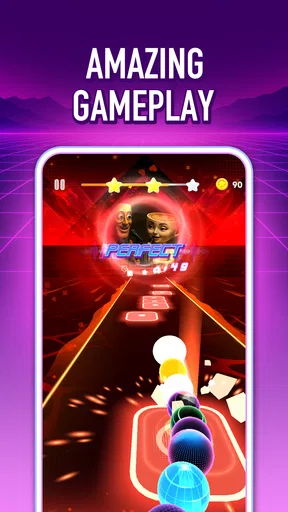
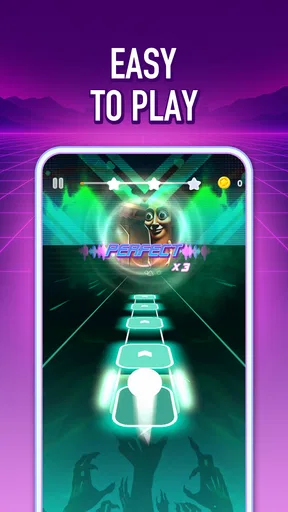
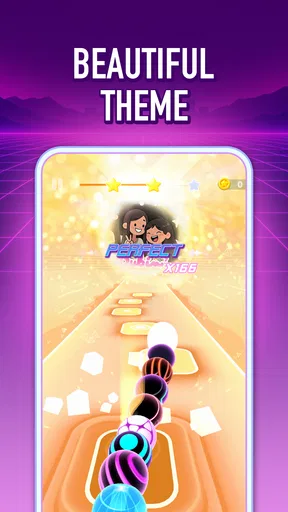


Our Review of Piano Ballz Beat: Music Games
 Analysis by Appyee
I approached Piano Ballz Beat: Music Games expecting a quick rhythm distraction, and that is exactly where it works best. It is a free music game from Cobby Labs built around piano-style tapping, familiar K-pop energy, and ball-based movement. My overall view is simple: it is an approachable pick for short sessions, especially if you enjoy music games but do not want a complicated system to learn.
Its appeal comes from the combination of two ideas that usually attract different players. The piano element gives each song a clear beat to follow, while the ball-game presentation makes the action feel more visual and immediate. You are not approaching it as a serious piano simulator, and I would not recommend it to someone looking for formal rhythm training. Instead, it feels designed for the moment when you have a few minutes and want something reactive, colorful, and easy to understand.
The game is listed in the Music category, carries an Everyone age rating, and is free to play. That makes it easy to suggest to younger players or to someone who normally avoids more demanding mobile games. It has also reached over a million installs and holds a 4.2 average from around 1.6 thousand ratings, which gives a useful indication that the basic idea is connecting with a reasonably broad audience.
How the piano and ball concept feels in everyday play
The central experience is built around following musical timing rather than slowly developing a character, exploring a map, or managing a large collection of items. That focus is valuable because it reduces the time between opening the game and actually playing. I like games that respect a short break, and this one is naturally suited to a bus ride, a study pause, or a few minutes before bed.
The K-pop direction also gives it a stronger identity than a completely anonymous piano tapper. The music is not just background decoration; it is the reason to keep trying another round. When a track has a beat that immediately catches your attention, the visual ball movement and piano-style interaction reinforce each other. Even when I am not chasing a perfect result, the rhythm gives the session a clear purpose.
One practical strength is that the concept is understandable without a long explanation. A new player can recognize the relationship between the moving ball, the musical track, and the need to react at the right moment. That matters on a phone, where complicated controls can feel uncomfortable and where a game has only a short window to make a good first impression.
I would describe the difficulty as something you experience through timing rather than through a traditional progression system. The important skill is learning to anticipate the beat instead of tapping only after an object is already in front of you. That small change in approach is one of the more useful lessons I took from playing it: watching the rhythm and the movement together is more reliable than staring at one visual element.
For that reason, I recommend using headphones when you can, not because the game becomes impossible without them, but because the beat is easier to follow when it is separated from surrounding noise. In a busy room, visual timing can become tiring. With clearer audio, the experience feels less like guessing and more like responding to a song.
Why the presentation works for short sessions
Many mobile rhythm games ask players to remember several lanes, abilities, menus, and progression screens. Piano Ballz Beat keeps its first impression much lighter. The ball imagery makes the action feel playful, while the piano framing tells you what kind of attention the game expects. I found that combination more welcoming than a dense interface aimed at experienced rhythm-game fans.
That simplicity is particularly useful for casual players. Someone who has never played a lane-based rhythm title can understand the basic goal quickly. A younger player can also enjoy the musical feedback without needing to learn a complex control scheme. Since the content rating is Everyone, the game fits family-friendly casual gaming better than many music titles that lean into darker visuals or more aggressive themes.
There is also a useful difference between playing for entertainment and playing for improvement. On a first attempt, the game can be treated as a light music toy. After a few sessions, the same tracks become opportunities to improve concentration and timing. I suggest choosing one song and replaying it deliberately rather than jumping constantly between tracks. Repetition makes the beat easier to internalize, and it shows whether a missed note came from poor timing or from losing focus.
That replay approach is a small but meaningful way to get more from the game. The store summary presents it as a piano game with popular K-pop songs and ball-game fun, but the better use is to treat each attempt as a short timing exercise. I found that the game becomes more satisfying when I stop expecting every round to be effortless and instead pay attention to where my rhythm breaks down.
The strongest reason to try it
The best argument for installing it is accessibility. You do not need to be familiar with music notation, own a musical instrument, or understand advanced rhythm-game terminology. The music supplies a natural pulse, and the visual action gives that pulse a clear on-screen form. This makes the game suitable for a quick introduction to the genre.
It is also a good choice for people who enjoy K-pop but do not necessarily want a full artist-management or collection game. Those larger alternatives often surround the music with card systems, missions, upgrades, and long-term progression. Here, the attraction is more direct: listen, react, and try again. If that narrower loop is what you want, the lack of extra management is a benefit rather than a missing feature.
I can imagine recommending it to a friend who says, “I want something musical, but I do not want to spend an hour learning it.” That is the clearest use case. The game is easy to pick up, and its ball-based visual style gives it a different feel from a plain piano-tile clone. It does not need a large explanation to become playable.
Another strength is how naturally it fits intermittent play. You can use it as a mental reset between tasks rather than as a game that demands a long uninterrupted commitment. A student could play a brief round after finishing a reading assignment, or someone waiting for an appointment could use it to occupy a few minutes. The music gives the break more energy than a passive scrolling session, while the simple format avoids a large learning burden.
Still, I would keep expectations realistic. This is not the right recommendation if your priority is deep musical expression, precise instrument practice, or an extensive competitive scene. Its value is in immediate rhythm-based enjoyment, not in replacing a piano-learning app or a more sophisticated rhythm platform.
Where the experience can become less satisfying
The same simplicity that makes the game approachable can also limit its long-term appeal. Players who need a strong sense of progression may eventually want more structure than a song-centered tapping experience provides. If you usually stay motivated through detailed unlock trees, character development, or strategic customization, this may feel too focused on the basic act of playing.
I also think the ball presentation will not suit everyone. Some players prefer rhythm games where the notes and lanes remain visually restrained, because that makes timing easier to read. A more animated ball-focused view can feel lively, but it may also compete with the musical cues when the screen becomes busy or when the player is already struggling with a fast section. My advice is to prioritize the clearest visual reference rather than trying to follow every decorative movement.
There is a second trade-off for experienced rhythm players. A beginner-friendly design can make the opening sessions comfortable, but experts may want more demanding patterns and finer control over how they practice. If you are searching for a game that can occupy you for months through increasingly technical play, I would compare it with a dedicated rhythm title before committing your time here.
The free price is a clear advantage for trying it without financial risk, but free mobile games can be easier to sample than to make a permanent part of your routine. I recommend giving it a focused test: play several sessions at different times of day, use both sound and visual cues, and see whether the K-pop selection itself keeps you returning. If the songs do not hold your attention, the basic interaction may not be enough to carry the experience alone.
Device compatibility is reasonably broad for a modern casual game, with Android support beginning at version 6.0. That helps people using older phones avoid the assumption that they need a recent flagship device. Even so, rhythm games are sensitive to interruptions and touch response. Before judging your timing, close demanding background apps and make sure your phone is not struggling with heat or notification overload. A missed beat caused by a distracted screen is not the same as a missed beat caused by poor rhythm.
The current version is 0.3.2, so I see this as a game that should be approached with some patience regarding its stage of development. I would not use that version label as a promise of a particular future roadmap. Instead, I would judge the present experience on its own terms: it already offers a recognizable music-game loop, but players seeking a very mature, feature-heavy platform may prefer an older and more established alternative.
Who will get the most from it
This is a strong fit for casual K-pop listeners, younger players, and anyone who likes games that can be understood almost immediately. It is also suitable for people who want to improve their sense of timing in a playful way without turning the activity into formal practice. The combination of music and ball movement gives it enough character to stand apart from a completely generic tapping game.
I would especially recommend it to someone who gets bored by menu-heavy mobile games. There is less pressure to manage a virtual collection or make complicated strategic decisions. You can focus on the track and your reactions. That makes it a useful choice for a shared device, a quick family-friendly activity, or a personal break when you want something more engaging than a video but less demanding than an action game.
It is less suitable for players who dislike repetition. Rhythm games naturally ask you to replay songs, and this one depends on that loop to build satisfaction. If you want a different story or environment every few minutes, the format may feel narrow. Likewise, if your main goal is to discover a large range of music genres, the K-pop-centered identity may be more restrictive than a broader music game.
Players who need accessibility options, extensive control customization, or highly detailed performance feedback should also compare alternatives carefully. I would not choose this as a substitute for a music-learning tool. Its purpose is entertainment through timing, not instruction in technique, theory, or instrument handling.
For a first session, I suggest playing somewhere quiet, using headphones if practical, and resisting the urge to switch tracks after one mistake. Follow the beat with your attention before trying to react faster. Once the movement begins to feel predictable, your taps should become more consistent. This approach is more effective than simply pressing harder or staring at the ball without listening.
How it compares with common alternatives
Compared with a traditional piano-tile game, this title has a more playful visual personality because the ball element gives the action a sense of motion. A piano-tile alternative may be better for someone who wants a very clean, minimal interface and a direct focus on descending notes. Piano Ballz Beat is the better choice when the visual movement and K-pop atmosphere are part of the attraction.
Compared with a full rhythm-game platform, it is easier to enter but probably less appealing to players who want a deep competitive routine. Larger rhythm games often provide more complex charts, broader progression, and stronger reasons to return for long sessions. This game wins when convenience matters more than depth. I would choose it for a short break and a larger alternative for serious long-term mastery.
Compared with a piano-learning app, the distinction is even clearer. A learning app may teach finger placement, reading, or structured exercises. This game teaches attention to pulse only in the informal sense of repeated timing practice. It can make musical interaction feel approachable, but it should not be mistaken for lessons.
That comparison helped me understand its proper place. It is not trying to be an instrument, a concert simulator, or a large social platform. It is a compact music game with a K-pop focus and a ball-based presentation. Its strongest quality is the low barrier between curiosity and play. Its main weakness is that the same directness may not provide enough variety for demanding players.
My verdict after weighing the trade-offs
I think Piano Ballz Beat: Music Games is worth trying if you want a free, family-friendly rhythm experience with a K-pop flavor and a distinctive ball-game angle. Cobby Labs has chosen a clear idea rather than burying the music under a complicated system, and that clarity is what makes the game easy to recommend for casual sessions.
The rating of 4.2 from around 1.6 thousand ratings and its reach of over a million installs suggest that the concept has found an audience, but those figures should not decide the choice by themselves. The more important question is whether you enjoy replaying songs to improve timing. If you do, the game has a pleasant pick-up-and-play quality. If you need deep progression, advanced rhythm charts, or genuine piano instruction, another category of app will serve you better.
I would install it for a short daily music break, especially when I want something more active than listening and less involved than a full game. I would skip it when looking for a long-form challenge or a serious practice tool. That is not a criticism of its purpose; it is simply the boundary of what this format does well.
Overall, my recommendation is positive but specific: try it as a light K-pop rhythm game, not as a piano simulator. The free entry point, Everyone rating, accessible Android requirement, and focused gameplay make it welcoming. Just give it a fair test with sound on, play tracks more than once, and decide based on whether the timing loop remains enjoyable after the first novelty fades. For the right player, the simple design is the feature, not the compromise.
Privacy and Permissions
See what permissions an app requests and how it handles your data.
- Wi-Fi connection information
- view Wi-Fi connections
- Other
- view network connections, full network access, control vibration, prevent device from sleeping, Google Play license check
Verdict
Strengths of Piano Ballz Beat: Music Games
- Simple tap-based controls are easy for beginners to understand.
- Short levels make it convenient for quick gaming sessions.
- Bright visuals and rhythmic effects create an energetic atmosphere.
- The music-based gameplay offers a satisfying sense of timing.
- Playable on the go without needing complex controls.
Limitations of Piano Ballz Beat: Music Games
- Later stages can become difficult and require very precise taps.
- Frequent ads may interrupt the experience between attempts.
- The gameplay may feel repetitive after extended sessions.
- Some songs or features may require in-app purchases.
- Fast patterns can be challenging on smaller phone screens.
Other Releases by Cobby Labs
View All
Dancing Cats - Cute Music Game
Music4.6

Rolling Twins: Music Ball Rush
Music4.6

Piano Hop - Music Jump Ball
Music4.5

Goods Master 3D: Puzzle Games
Casual3.9
Similar Picks in This Category
View All
Tiles Hop Music & Ball Game
AMANOTES PTE. LTD.4.3

Magic Tiles 3™ - Piano Game
AMANOTES PTE. LTD.4.6

Real Piano
Bilkon3.7

Piano Game: Classic Music Song
Dream Tiles Piano Game Studio4.0

Smash Colors: Music Ball Rush
BADSNOWBALL HONGKONG LIMITED4.2

Piano Music Go-EDM Piano Games
Joy Journey Music Games4.5
Frequently Asked Questions
What is Piano Ballz Beat: Music Games?
Piano Ballz Beat: Music Games is a rhythm-based mobile game in which you tap, follow, or interact with falling musical notes and tiles in time with the soundtrack. It combines simple one-touch controls with progressively faster patterns, making it easy to start but increasingly challenging to master. The game is designed for short sessions, score chasing, and casual music entertainment.
How do you play Piano Ballz Beat: Music Games?
Gameplay is based on timing and concentration. As notes or balls move toward the target area, you must tap the correct tiles or screen positions in rhythm with the music. Missing an input can break your streak or reduce your score, while accurate consecutive taps usually help build combos. Before downloading, remember that the later levels require quick reactions and consistent timing.
Is Piano Ballz Beat: Music Games free to download and play?
Piano Ballz Beat: Music Games can generally be downloaded without an upfront purchase, allowing players to try the main gameplay at no initial cost. However, free versions of mobile rhythm games may include advertising, optional purchases, or content that becomes available through progression. Check the current store listing for exact pricing, in-app purchase details, and any regional differences before installing.
Does Piano Ballz Beat: Music Games work offline?
Some basic gameplay may be available without a continuous internet connection, but offline access can depend on how the game handles song downloads, advertisements, updates, and account or progress synchronization. An internet connection may still be required when starting the app for the first time or unlocking certain content. If offline play is important, test the game after installation and review its latest store requirements.
Is Piano Ballz Beat: Music Games suitable for children?
The controls are simple and the music-game format can be appealing to children, teenagers, and adults. Nevertheless, parents should check the age rating, advertising content, privacy information, and available in-app purchases before allowing younger players to use it. Fast levels may also become frustrating for beginners, so supervision and purchase restrictions are recommended, especially on shared family devices.
Play our best games!


